How to stop a dog shedding so much: brushing, baths and what is normal
You cannot stop a healthy dog from shedding. Losing old hair is how a coat renews itself. What you can do is take the loose hair out yourself, on a schedule, so it comes out on a brush instead of on the floor. For most shedding dogs that means brushing a few times a week, and every day during the heavy spring and autumn shed, with a tool that reaches the undercoat.
Why some dogs shed so much more
Double-coated breeds, such as huskies, shepherds, retrievers and corgis, carry a dense, soft undercoat beneath the outer coat. They drop much of it once or twice a year, usually in spring and autumn, which groomers call blowing coat. Short single coats shed a little all year. Curly coats like poodles and many doodles shed less onto the floor, because loose hair gets caught in the curls, which is also why they mat.
Which brush for which coat
- Double coats: an undercoat rake or a deshedding tool to pull out the loose undercoat, then a slicker brush over the top.
- Short, smooth coats: a rubber curry brush or a bristle brush, which lifts loose hair and dead skin.
- Curly and doodle coats: a slicker brush and a metal comb. Brush in sections down to the skin, then run the comb through. If the comb catches, there is a tangle the brush missed.
- Long, silky coats: a pin brush and a comb, gently, working out from the skin.
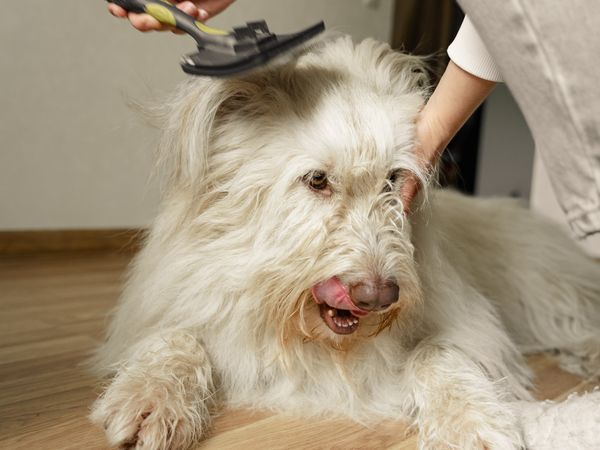
Brushes and deshedding tools
Regular brushing means less hair everywhere, including in the cat.
View on Amazon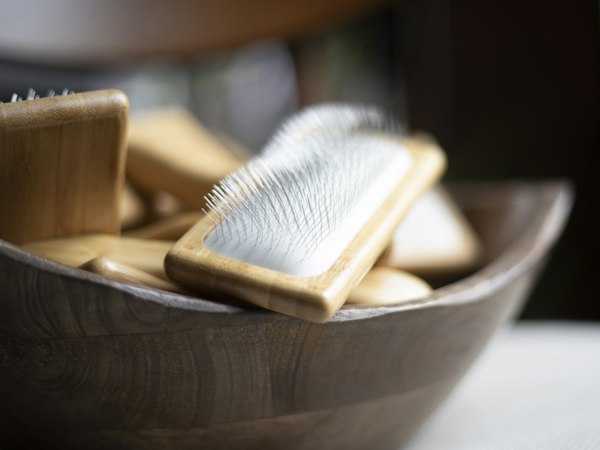
Slicker brushes
Curly and doodle coats mat close to the skin. Groomers follow a slicker with a metal comb to check they reached the bottom.
View on Amazon
also handyUndercoat rakesMetal grooming combs
Amazon affiliate links: PawsRx may earn a commission at no cost to you. We have not tested these products and nothing here is veterinary advice.
How to brush a shedding dog
- Start where your dog likes being touched, usually the back and sides.
- Work in small sections, brushing in the direction the hair grows.
- Use the rake or deshedding tool with light pressure. It is made to catch loose undercoat, not to scrape skin; pressing hard or going over one spot again and again can irritate it.
- Go over the coat with a slicker brush to lift what is left.
- Check the places that tangle: behind the ears, the armpits, the backs of the legs and the tail.
- Keep the first sessions short and stop before your dog has had enough.
Brushing a doodle or poodle between grooms
A curly coat needs a different job: keeping it from matting rather than removing shed hair. Groomers call the method line brushing. Part the coat with one hand so you can see the skin, brush the hair above the part down and out with a slicker, move the part up a little and repeat, then comb each section to check. Mats form fastest where the coat rubs: under the collar and harness, in the armpits, behind the ears and on the legs.
Brushing only the top of the coat leaves the mats underneath, which is how a doodle that looks fluffy can still need a shave down. Mats cost extra at the salon too: at salons that charge a flat dematting fee it starts at a median of $20, across 312 salons' menus (September 2026).
Do baths help with shedding?
A bath followed by a thorough dry loosens a lot of undercoat at once. At home, brush before the bath, because water tightens tangles, then brush again once the coat is completely dry. Bathing more often than your dog needs does not stop shedding and can dry out the skin.
Should you shave a double-coated dog to stop shedding?
Many groomers advise against it. Shaving does not stop shedding; the hair just falls out shorter. A double coat also shields the skin from the sun, and after a close shave some double coats grow back patchy or uneven. If a coat is matted to the skin, a shave can still be the kind option, and that is a conversation to have with your groomer.
When shedding is a question for a vet
Seasonal shedding is normal. Call a veterinarian if hair is coming out in patches and leaving bare skin, if the skin underneath is red, flaky, scabby or smells, if your dog is scratching, licking or chewing more than usual, or if the shedding changed suddenly along with anything else about how your dog is eating, drinking or acting. The home remedies that come up in searches, oils and vinegar among them, and any supplement or diet change for the coat, are worth asking a vet about before you try them.
Common questions
Can you stop a dog from shedding?
No. Shedding is how a healthy coat replaces itself. Regular brushing with a tool that reaches the undercoat takes out loose hair before it lands on the floor, and that is the most you can do for a healthy dog. A sudden change in shedding, bald patches or itchy skin are reasons to call a veterinarian.
How often should I brush a dog that sheds a lot?
Several times a week for most double-coated dogs, and every day during the heavy spring and autumn shed. Short, frequent sessions tend to go better than one long one.
What kind of brush is best for a dog that sheds?
It depends on the coat. Double coats usually need an undercoat rake or deshedding tool plus a slicker brush. Short coats do well with a rubber curry or bristle brush. Curly coats need a slicker and a metal comb. PawsRx does not rank brands.
Does shaving a dog stop shedding?
No. The hair still sheds, only shorter. Many groomers advise against shaving double-coated breeds, because the coat protects the skin and can grow back unevenly.
How do I brush a doodle between grooms?
Line brush: part the coat down to the skin, brush the hair above the part with a slicker, comb it to check, and move the part up. Pay most attention to behind the ears, under the collar and harness, the armpits and the legs, where mats start.
When is shedding a problem?
When hair comes out in patches and leaves bare skin, when the skin is red, flaky, scabby or smells, when your dog is scratching or licking more than usual, or when the shedding changed suddenly. Those are questions for a veterinarian.
On PawsRx
PawsRx is a platform, not a groomer or a clinic. Product links go to Amazon search results, not to one product, and are affiliate links: PawsRx may earn a commission at no cost to you. We have not tested these products and do not rank brands. Skin, coat loss and anything you give your dog to eat or take are questions for a veterinarian. Nothing here is veterinary advice.
Got a question about your own pet? Ask a licensed vet.
Ask a vet